DevOps
DevOps is a culture of work and team collaboration aimed at improving cooperation between development and operations.
Phases:
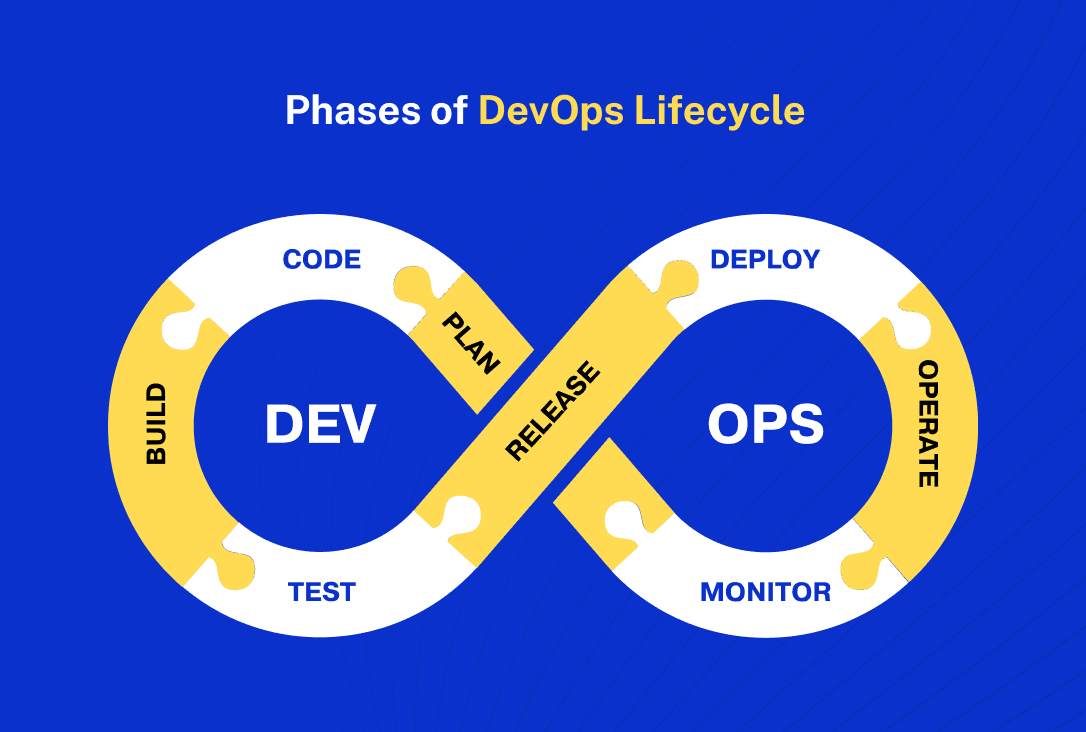
- Plan - defining tasks, strategies, and project goals
- Code - writing the code defined during planning
- Build - integrating the written code into the project (using Git)
- Test - testing the project's functionality with the newly added code
- Release - final verification, bringing the project to release readiness according to the input requirements
- Deploy - deploying the project (using automation tools for maximum efficiency), with various DevOps tools
- Operate - working with the deployed project in a real production environment with end users involved.
- Monitor - collecting statistical data, feedback, and product usage experience to identify problems and improvement opportunities. After this, the cycle returns to the planning phase.
7C - organizes the phases listed above into a more comprehensible framework:
1) Continuous Development = Plan + Code 2) Continuous Integration = the goal is to remove manual verification, enable automated testing, and deploy the project to a central hub to build it automatically (e.g., using Jenkins) and notify team members about changes. Unit and integration tests, as well as code reviews, are performed here. 3) Continuous Testing = implementing testing, running tests with tools like Selenium. QA engineers work here, determining whether the project meets the customer's requirements and identifying bugs. Test reports are generated. 4) Continuous Deployment = Deploy + Operate. Containerization and tools like Ansible are used. 5) Continuous Feedback - ensuring feedback loops, collecting input from all stakeholders, identifying areas for future improvement. 6) Continuous Monitoring 7) Continuous Operations