Tech-checks
DevOps Basics:
What do you know about DevOps? DevOps is not a technology but a culture of collaboration between development and operations teams. It is guided by principles such as team interaction, knowledge sharing, automation, and eliminating unnecessary tasks. The team should feel shared responsibility rather than each person only caring about their own area. Knowledge should be shared and documented so that when teams change, development continues and people learn and share their acquired knowledge. Everything that consumes significant human resources and can be automated (where doing it manually each time takes longer than writing a script once) should be automated to avoid wasting time on it. Everything that does not bring value or progress is an unnecessary task and should be eliminated, with the focus on progress. Furthermore, DevOps approaches in software development are aimed at minimizing the time from idea to implementation, improving feedback in all aspects of development among all team members and stakeholders, and encouraging the team to continuously grow and improve their knowledge.
Name the most popular DevOps tools. GIT, Jira, Python, Bash, GNU/Linux, Ansible, Terraform, Docker, Kubernetes, AWS, Azure, Jenkins, Prometheus
Version control (Git), project management (Jira), programming languages (Python, Bash), operating systems (Linux), configuration management (Ansible), infrastructure as code (Terraform), containerization (Docker), cloud platforms (Azure, Amazon), and continuous integration/continuous delivery (Jenkins, Prometheus).
Name the DevOps phases (SDLC). The phases are planning, writing code, building the product, testing, deployment, operation, and monitoring. For example, planning involves defining the project scope, creating a roadmap, and setting goals. Writing code involves writing and reviewing code as well as using version control systems. Building the product involves compiling and packaging the code into a deployable artifact. Testing includes various types of testing such as unit, integration, and acceptance testing. Deployment involves releasing the product to the production environment. Operation involves managing and maintaining the product in the production environment. Monitoring involves tracking and analyzing product performance and user feedback.
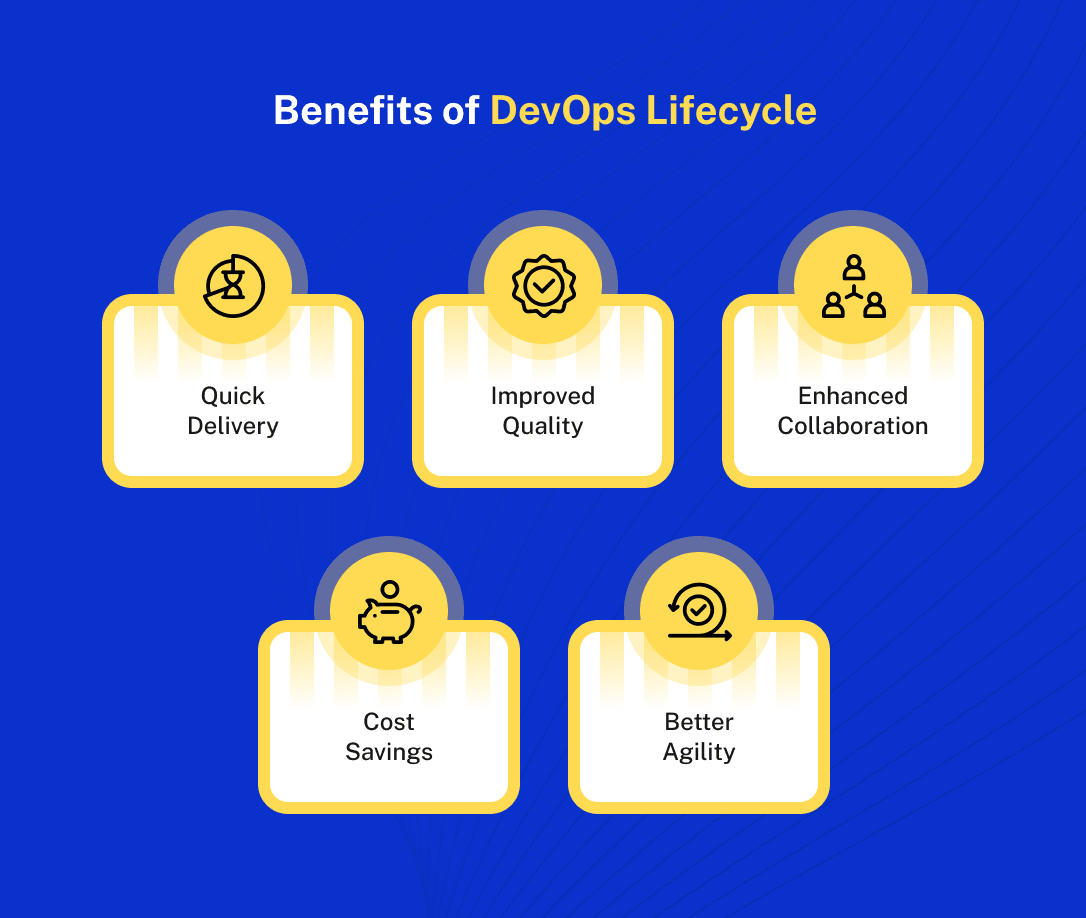
Name the main advantages of DevOps. Better product quality, faster software development process, stakeholder involvement at every stage (feedback), ability to make changes at any stage of development (flexibility), process automation and elimination of unnecessary tasks -- saving time and money.
How would you approach a project that needs DevOps implementation? I would look for weak points by examining the project's KPIs and take measures to improve the metrics. Key Performance Indicator (KPI) for DevOps measurements:
- Deployment frequency (how often new versions are released)
- Change lead time (how long changes remain in development)
- Mean time to detection (how quickly you detect problems)
- Mean time to recovery (how quickly you fix problems)
- Change failure rate (how often releases contain errors) It would also be useful to mention the importance of collaboration and communication between different teams in a DevOps environment.
Why has DevOps gained popularity in recent years? Yes, DevOps has gained popularity in recent years due to the growing need for collaboration and automation in software development. However, the answer could be improved by mentioning specific benefits of DevOps such as faster software delivery, improved quality, and increased efficiency. Additionally, the answer could mention the role of cloud computing and the rise of agile methodologies in driving DevOps adoption.
What are the main differences between DevOps and Agile?
DevOps is a software development approach that focuses on collaboration and communication between software developers and operations teams, while Agile is a project management approach that emphasizes flexibility and adaptability in the development process. DevOps aims to improve the speed and quality of software delivery, whereas Agile focuses on delivering working software in short iterations.
Name three of the most important DevOps KPIs. Change lead time, deployment frequency, and mean time to recovery.
In DevOps there are three phases: plan, build, and run. The plan phase includes software planning and design, the build phase includes coding and testing, and the run phase includes deployment and monitoring. Additionally, collaboration and communication between teams at every stage are important. Specific KPIs for each stage include, for example, change lead time at the planning stage, deployment frequency at the build stage, and mean time to recovery at the run stage. Furthermore, it is important to measure customer satisfaction and business impact as DevOps KPIs.